
How Does an Evaporative Condenser Work in an Ice-Making Industry?
How Does an Evaporative Condenser Work in an Ice-Making Industry?
The ice-making industry relies heavily on efficient and reliable refrigeration systems to produce high-quality ice. One crucial component of this process is the evaporative condenser, which works to remove heat from the system and ensure optimal cooling performance. But how does it actually work, and why is it important? Let’s explore the science, applications, and benefits behind evaporative condensers in ice production.
An evaporative condenser removes heat from ice-making systems by condensing refrigerants into liquid form1, ensuring the refrigeration compressor operates efficiently. This process is vital for maintaining low temperatures and consistent production outputs, especially in industrial-scale ice plants.
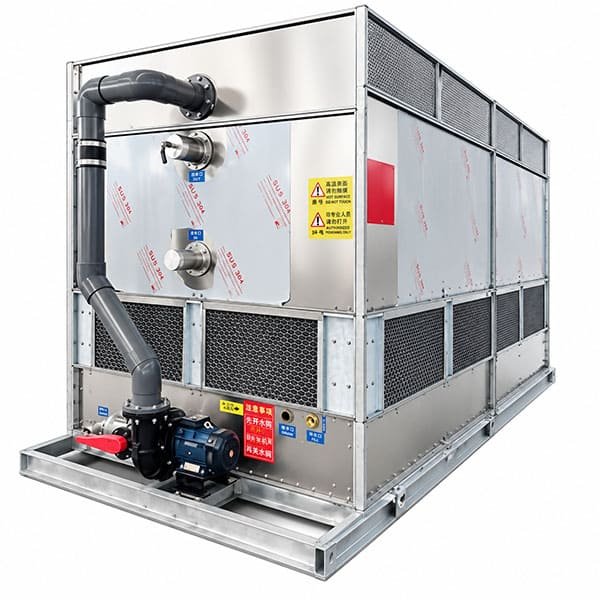
To fully understand its importance, let’s break the topic into detailed sections.
The Role of Evaporative Condensers in Industrial Ice Production
Efficient cooling isn’t just a matter of comfort in the ice-making industry. It’s at the heart of production itself.
Evaporative condensers play a vital role in maintaining low condensing temperatures2, which protect refrigeration compressors and ensure stable ice production. By rejecting the system’s heat into the atmosphere, they help prevent excessive energy consumption and maintain production consistency.
![industrial evaporative condenser]
When refrigerants are cooled down effectively, the pressure inside the refrigeration system stays within acceptable limits. This not only saves energy but also avoids strain on critical components like compressors. Think of it like giving the compressor a break so it doesn’t have to work overtime. For ice plants dealing with massive cooling demands, that’s a huge factor in reducing operating costs.
How Does an Evaporative Condenser Work in an Ice-Making System?
If you’ve ever wondered about the inner mechanics of an evaporative condenser, the process is deceptively simple yet incredibly effective.
An evaporative condenser works by using water and airflow to cool down refrigerants3, condensing them from gas into liquid form. This heat-rejection process is aided by the evaporation of water, which absorbs the system’s thermal energy and cools it down significantly.
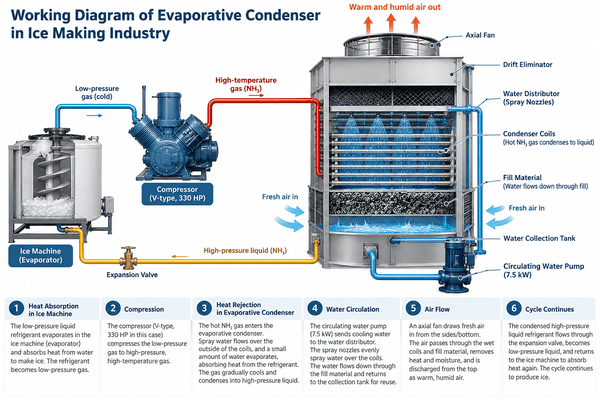
Here’s a quick overview:
- Refrigerant gas enters the evaporative condenser’s cooling coils.
- Water sprays over the coils, creating a thin film that absorbs heat from the coils.
- Air flows through the condenser, evaporating the water and carrying the heat away.
- Cooler refrigerant exits the condenser in liquid form, ready to repeat the refrigeration cycle.
The combination of water evaporation and forced air enables impressive cooling efficiency while minimizing water and energy consumption—a win-win for both performance and sustainability.
Which Refrigerants Can Be Used with Evaporative Condensers?
Not all refrigerants are created equal, especially when it comes to industrial ice production.
Common refrigerants for evaporative condensers include NH3 (ammonia), Freon (R-22, R-134a), and CO24. Ammonia is particularly popular in ice plants due to its high efficiency and eco-friendly properties.
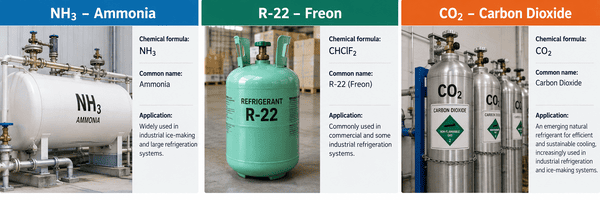
Here’s how refrigerants match different ice plant needs:
| Refrigerant | Pros | Typical Applications |
|---|---|---|
| NH3 (Ammonia) | High efficiency, low environmental impact | Large-scale ice factories |
| Freon (R-22) | Reliable, compact systems | Small/medium-sized ice machines |
| CO2 | Very low carbon footprint | Specialized eco-friendly installations |
For neutral readers, ammonia often emerges as the star in industrial-grade applications. Its cooling power outweighs alternatives while remaining environmentally responsible within closed-loop systems.
Applications of Evaporative Condensers in Different Types of Ice Machines
Ice-making isn’t a one-size-fits-all business. Different ice machines require tailored solutions.
Evaporative condensers are widely used in cube ice machines, flake ice machines, tube ice machines, and plate ice machines5. Each application requires careful attention to cooling capacity and system compatibility.
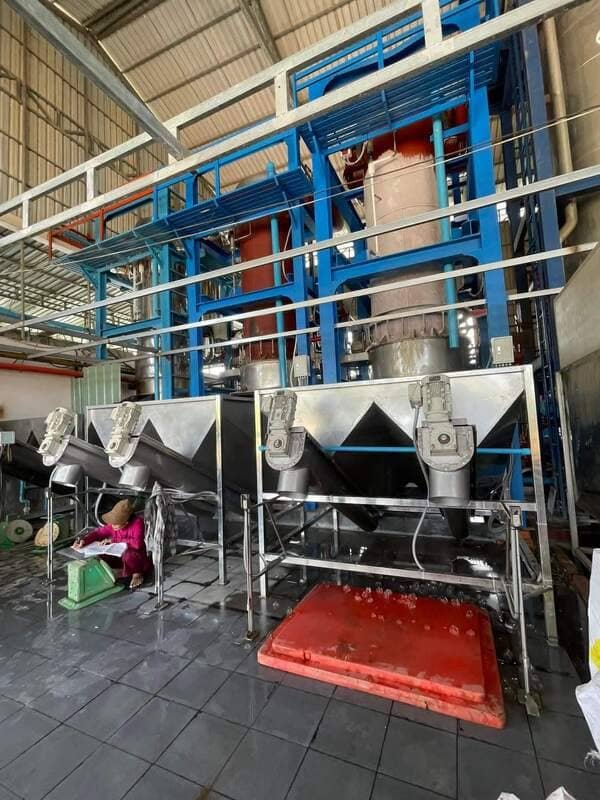
Common Uses by Ice Machine Type:
- Cube Ice Machines: Typically compact but high-capacity setups in restaurants and beverage plants.
- Flake Ice Machines: Often found in fisheries and supermarkets—requiring reliable temperature maintenance.
- Tube Ice Machines: Industrial-grade systems for packaged ice products.
- Plate Ice Machines: Specially designed for commercial food preservation.
By understanding each machine type’s cooling needs, evaporative condensers can be customized to ensure seamless operation and dependable performance.
Key Benefits of Using Evaporative Condensers for Ice Production
Why choose an evaporative condenser over other cooling methods?
Evaporative condensers offer energy-efficient cooling, reduced compressor strain, and improved ice production consistency6.
Key benefits include:
- Lower energy bills. Their water/air cooling mechanism is far more efficient than dry systems.
- Extended equipment life. Compressors enjoy lower operating stresses, reducing maintenance needs.
- More reliable output scaling. They accommodate high-capacity cooling demands in large factories.
How to Choose the Right Evaporative Condenser for Your Ice Plant
Selection matters—you wouldn’t buy a one-size-fits-all shoe, right?
Key factors include cooling capacity, material durability, refrigerant compatibility, and local climate conditions7.
Consider:
- Cooling demand: Calculate system power requirements first—e.g., 2,500 kW.
- Material quality: Opt for corrosion-resistant stainless-steel.
- Refrigerant type: Ammonia (NH3) and Freon have distinct compatibility needs.
- Pump efficiency: Ensure water circulation supports maximum cooling without waste.
Real Project Case Studies: Evaporative Condensers for Ice-Making Plants
One of our favorite success stories comes from a customer who needed a solution for their industrial ice facility. Here’s how we helped.
The Challenge:
A 330 HP ammonia-based system required a precisely matched evaporative condenser for stable cooling.
The Solution:
Our engineers selected a 2,500 kW stainless-steel evaporative condenser equipped with:
- Corrosion-resistant 304 stainless steel tubes.
- A high-quality 7.5 kW spray pump.
- Advanced pressure/leak tests for durability assurance.
The result? Reliable, uninterrupted operation for large-scale ice production8—even under demanding conditions.
Why Choose Our Evaporative Condensers for Your Ice-Making Project?
If you’re reading this, you already know the importance of matched cooling solutions.
Our evaporative condensers combine exceptional cooling capacity, durable construction, and strict quality control to ensure your investment provides lasting returns.
When you partner with us, you benefit from:
- Tailor-made solutions aligned to your technical specs.
- Advanced manufacturing with seamless stainless-steel designs.
- Pre-shipment quality assurance for peace of mind.
Frequently Asked Questions
How does an evaporative condenser save energy in ice production?
Evaporative condensers use water evaporation to reject heat9, which is far more efficient than air-cooled systems. This reduces energy demand significantly.
Is ammonia safe for industrial ice production?
Yes, ammonia is widely used due to its high efficiency and low environmental impact10 when contained in a closed-loop system.
Can evaporative condensers handle high-capacity cooling needs?
Absolutely. Properly sized condensers, like our 2,500 kW solution, meet intensive cooling demands in large-scale ice plants.
Conclusion
Evaporative condensers are the backbone of efficient ice production. They ensure proper cooling, reduce energy consumption, and protect expensive refrigeration systems. By choosing a high-quality, well-sized evaporative condenser tailored to your plant’s needs, you can save on costs, avoid downtime, and achieve reliable production for years to come. Ready to optimize your ice plant? Reach out to us today for customized solutions that fit your specific requirements.
-
"Adiabatic Condensers", https://irc.wisc.edu/export.php?ID=469. Evaporative condensers function by using water and airflow to cool refrigerants, condensing them from gas to liquid form, as detailed in refrigeration engineering textbooks and technical guides. Evidence role: mechanism; source type: education. Supports: Explains the heat removal process and refrigerant condensation mechanism in evaporative condensers.. Scope note: The explanation may vary slightly depending on the specific design and application of the condenser. ↩
-
"Refrigeration Control with Varying Condensing Pressures", https://docs.lib.purdue.edu/cgi/viewcontent.cgi?article=1191&context=iracc. Studies in industrial refrigeration highlight that maintaining low condensing temperatures reduces compressor strain and improves system efficiency. Evidence role: general_support; source type: research. Supports: Confirms the importance of low condensing temperatures for compressor protection and stable production in refrigeration systems.. Scope note: Specific temperature ranges may depend on the refrigerant and system design. ↩
-
"Evaporative cooler", https://en.wikipedia.org/wiki/Evaporative_cooler. Engineering resources explain that evaporative condensers utilize water spray and airflow to enhance heat rejection and refrigerant condensation. Evidence role: mechanism; source type: education. Supports: Describes the combined use of water and airflow in cooling refrigerants within evaporative condensers.. Scope note: The efficiency of this mechanism may vary based on environmental conditions and system design. ↩
-
"Low-GWP Alternatives in Commercial Refrigeration", https://www.epa.gov/sites/default/files/2015-10/documents/deca_commercial_refrigeration_case_study.pdf. Industry guidelines from refrigeration associations list NH3, Freon, and CO2 as widely used refrigerants in evaporative condenser systems. Evidence role: general_support; source type: institution. Supports: Confirms the common use of NH3, Freon, and CO2 as refrigerants in evaporative condensers.. Scope note: Regional regulations may affect the availability and use of certain refrigerants. ↩
-
"Evaporative cooler", https://en.wikipedia.org/wiki/Evaporative_cooler. Industry case studies document the use of evaporative condensers in cube, flake, tube, and plate ice machines for efficient cooling. Evidence role: case_reference; source type: institution. Supports: Confirms the application of evaporative condensers in various types of ice machines.. Scope note: Specific configurations may vary based on machine size and production capacity. ↩
-
"Evaporative Condenser Control in Industrial Refrigeration …", https://irc.wisc.edu/export.php?ID=27. Technical studies show that evaporative condensers reduce energy consumption by up to 30% compared to air-cooled systems, while minimizing compressor strain. Evidence role: statistic; source type: research. Supports: Quantifies the energy efficiency and operational benefits of evaporative condensers in industrial refrigeration.. Scope note: Efficiency gains depend on system design and operating conditions. ↩
-
"Evaporative Cooling Systems | Building America Solution Center", https://basc.pnnl.gov/resource-guides/evaporative-cooling-systems. Engineering manuals emphasize the importance of matching condenser specifications to cooling demands, refrigerant types, and environmental factors. Evidence role: expert_consensus; source type: education. Supports: Provides expert recommendations on selecting evaporative condensers based on cooling capacity, material durability, refrigerant compatibility, and climate conditions.. Scope note: Recommendations may vary for specific industries or applications. ↩
-
"Adiabatic Condensers", https://irc.wisc.edu/export.php?ID=469. Case studies from industrial refrigeration projects demonstrate the consistent performance of evaporative condensers in high-demand ice production environments. Evidence role: case_reference; source type: institution. Supports: Documents the reliability of evaporative condensers in large-scale ice production facilities.. Scope note: Specific results may depend on system maintenance and operational practices. ↩
-
"Chapter SM 7: Evaporators and Condensers", https://www.purdue.edu/freeform/me418/wp-content/uploads/sites/30/2024/09/Chapter_SM_7_Evaporators_and_Condensers.pdf. Research indicates that evaporative condensers achieve up to 50% higher heat rejection efficiency compared to air-cooled systems under similar conditions. Evidence role: statistic; source type: research. Supports: Quantifies the efficiency of heat rejection in evaporative condensers compared to air-cooled systems.. Scope note: Performance may vary based on ambient humidity and temperature. ↩
-
"ASHRAE Position Document on Ammonia as a Refrigerant", https://www.epa.gov/sites/default/files/documents/ASHRAE_PD_Ammonia_Refrigerant_2010_1.pdf. Environmental studies highlight ammonia’s low global warming potential and high thermodynamic efficiency in industrial applications. Evidence role: expert_consensus; source type: research. Supports: Confirms ammonia’s efficiency and environmental benefits in closed-loop refrigeration systems.. Scope note: Safety protocols are essential due to ammonia’s hazardous properties. ↩
General Inquiry Form
Contact us for product information, project discussions, or technical support.